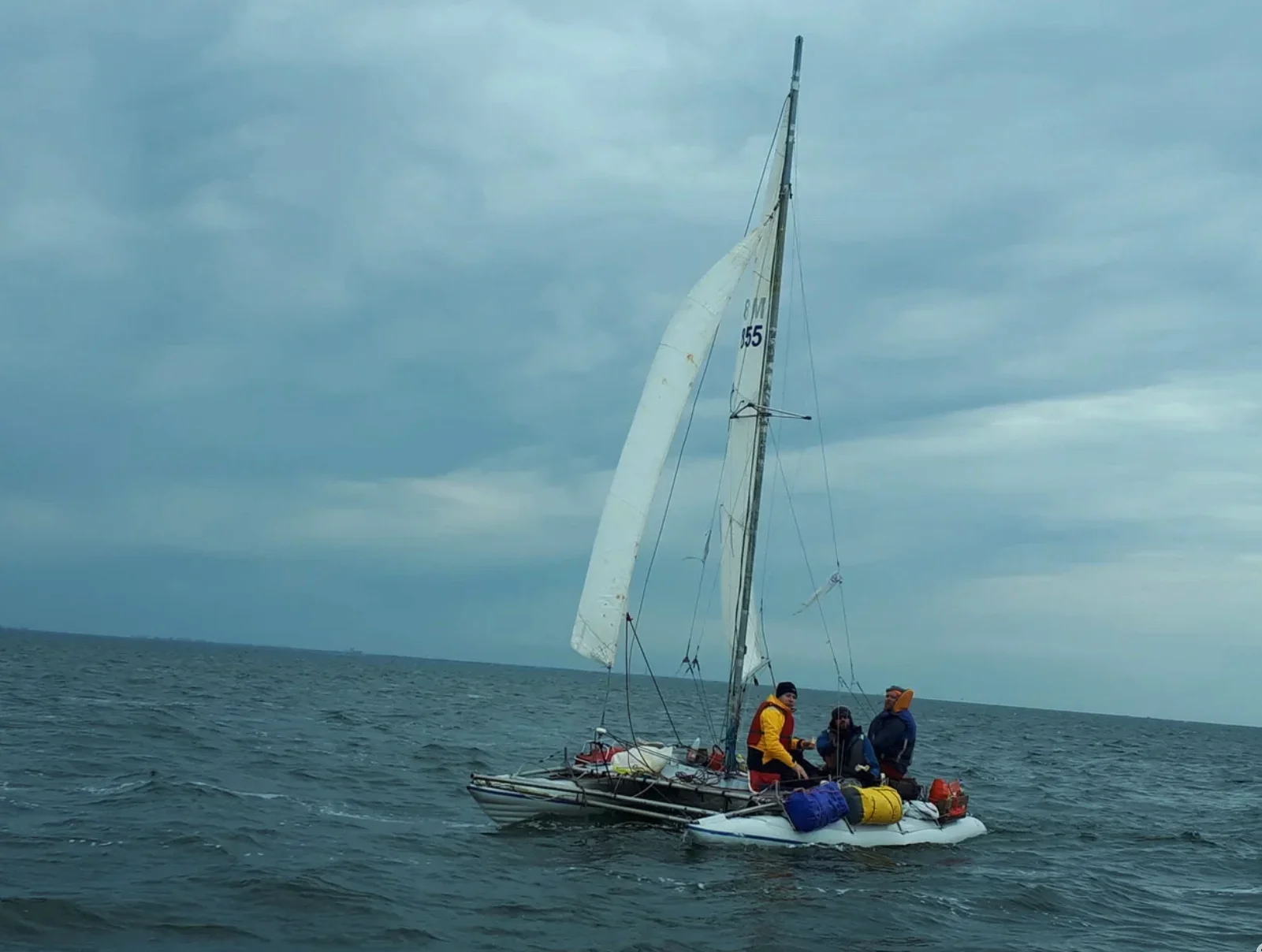
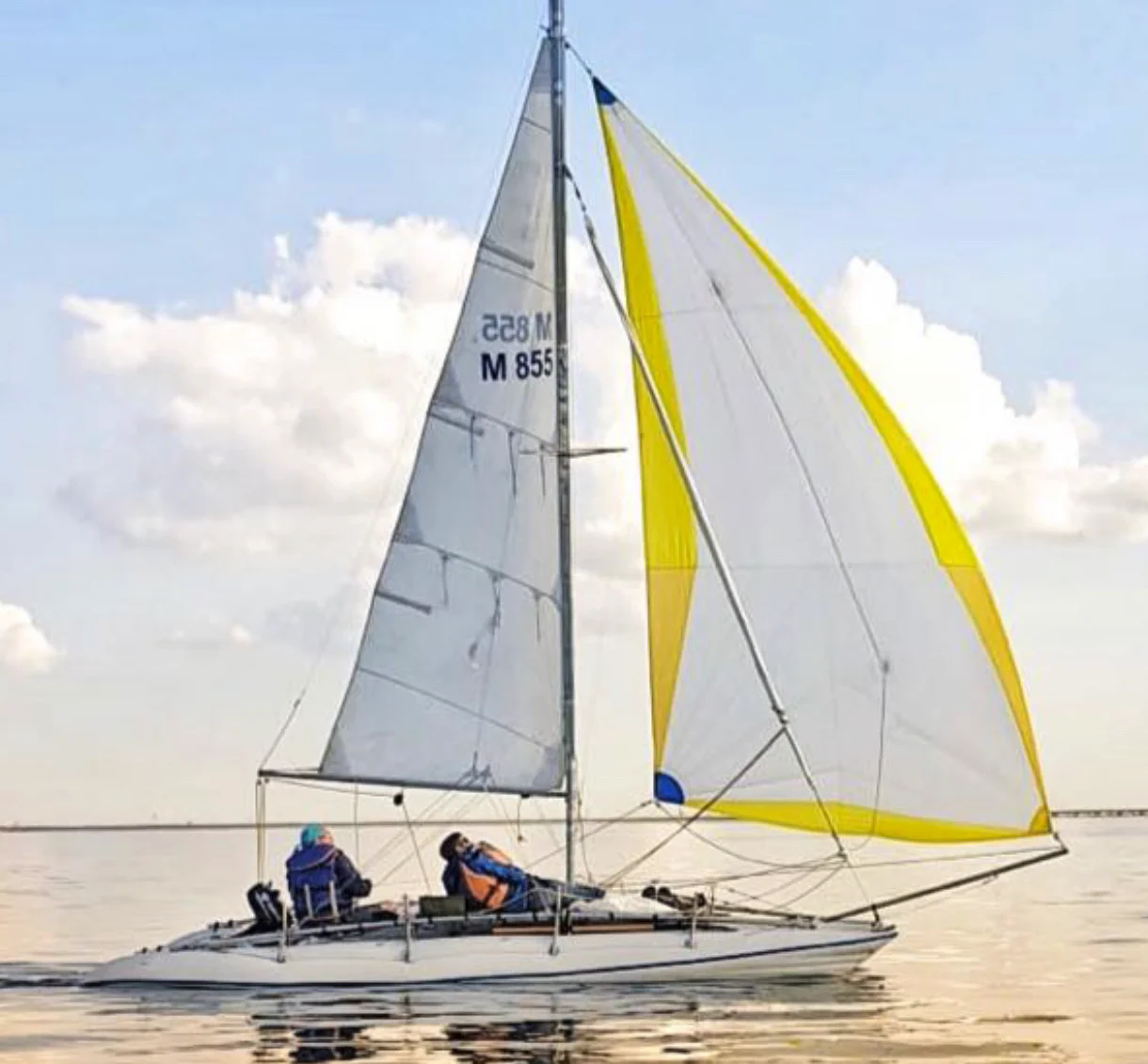
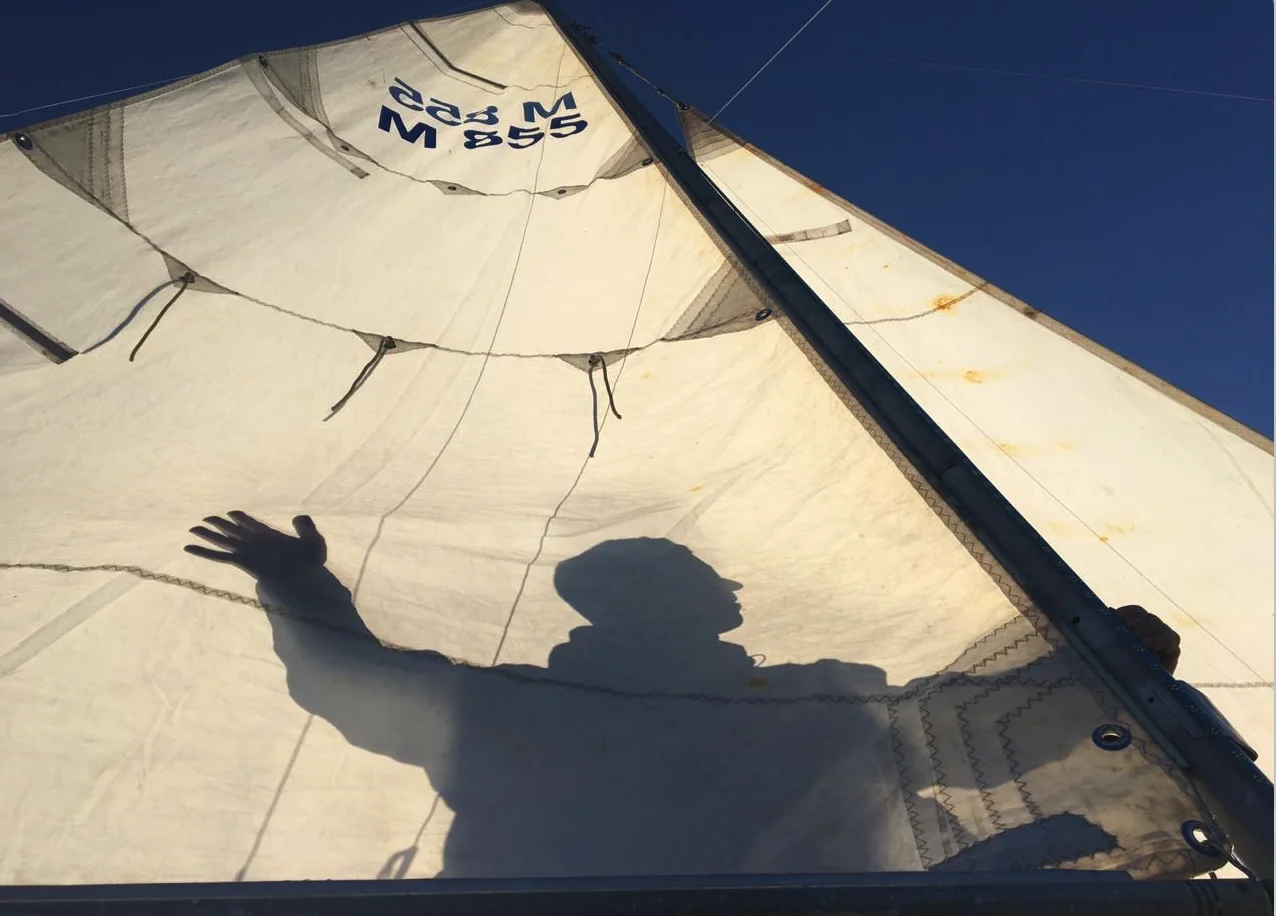
The story of this catamaran begins in the late Soviet era.
My friend Grigory Anikin was a member of the Skat scuba diving club. In those days, the Soviet government funded clubs like this. One day they ordered inflatable catamarans to transport scuba gear to diving sites, never expecting that the catamarans would actually come with sails. That was how Grigory unexpectedly became the captain of a factory-built Prostor catamaran.
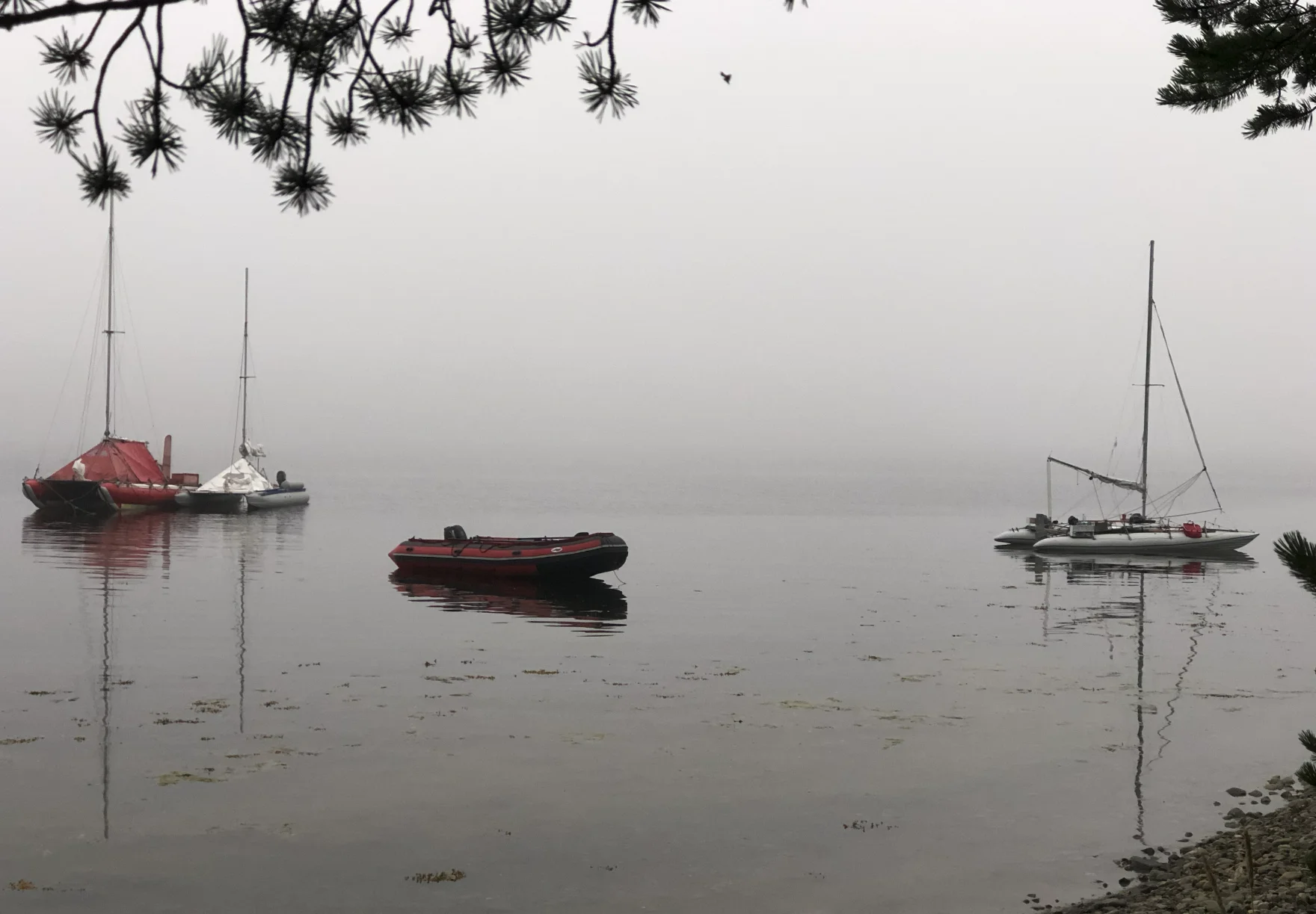
During one of their trips they met another group of sailors, who invited him to a secret catamaran community called Krapiva—which literally means nettle—hidden on the shore of a huge reservoir on the Volga River. The place was founded by sailing enthusiasts on a stretch of shoreline that could only be reached by water. Remarkably, Krapiva is still alive today (2026), thanks to generations of volunteers, enthusiasm, and an extraordinary sense of community.
When Grigory returned there in the early 1990s, he discovered extraordinary homemade racing catamarans that made the Soviet-built Prostor look like a toy. One boat immediately caught his attention. It belonged to Sergey Chekov, an aircraft factory engineer who—like many people in those days—quietly took aluminum tubing from the factory and used it to build catamarans.
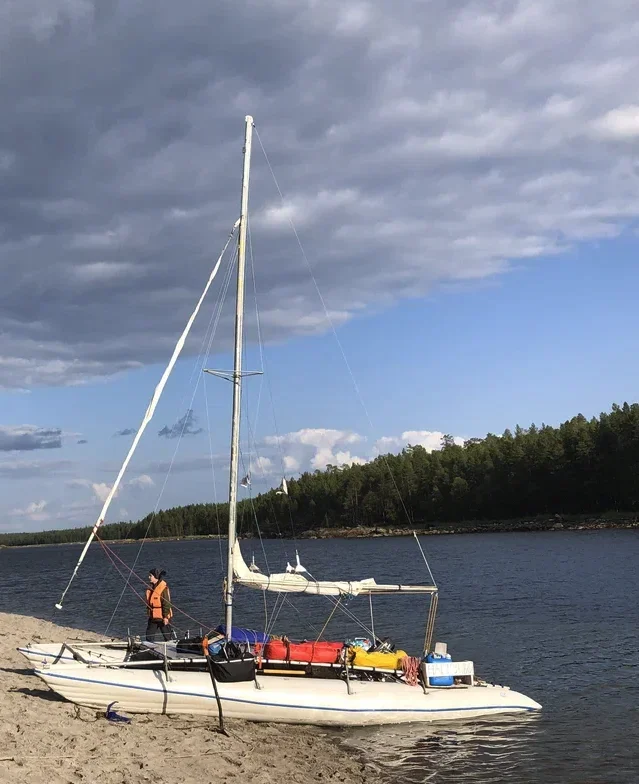
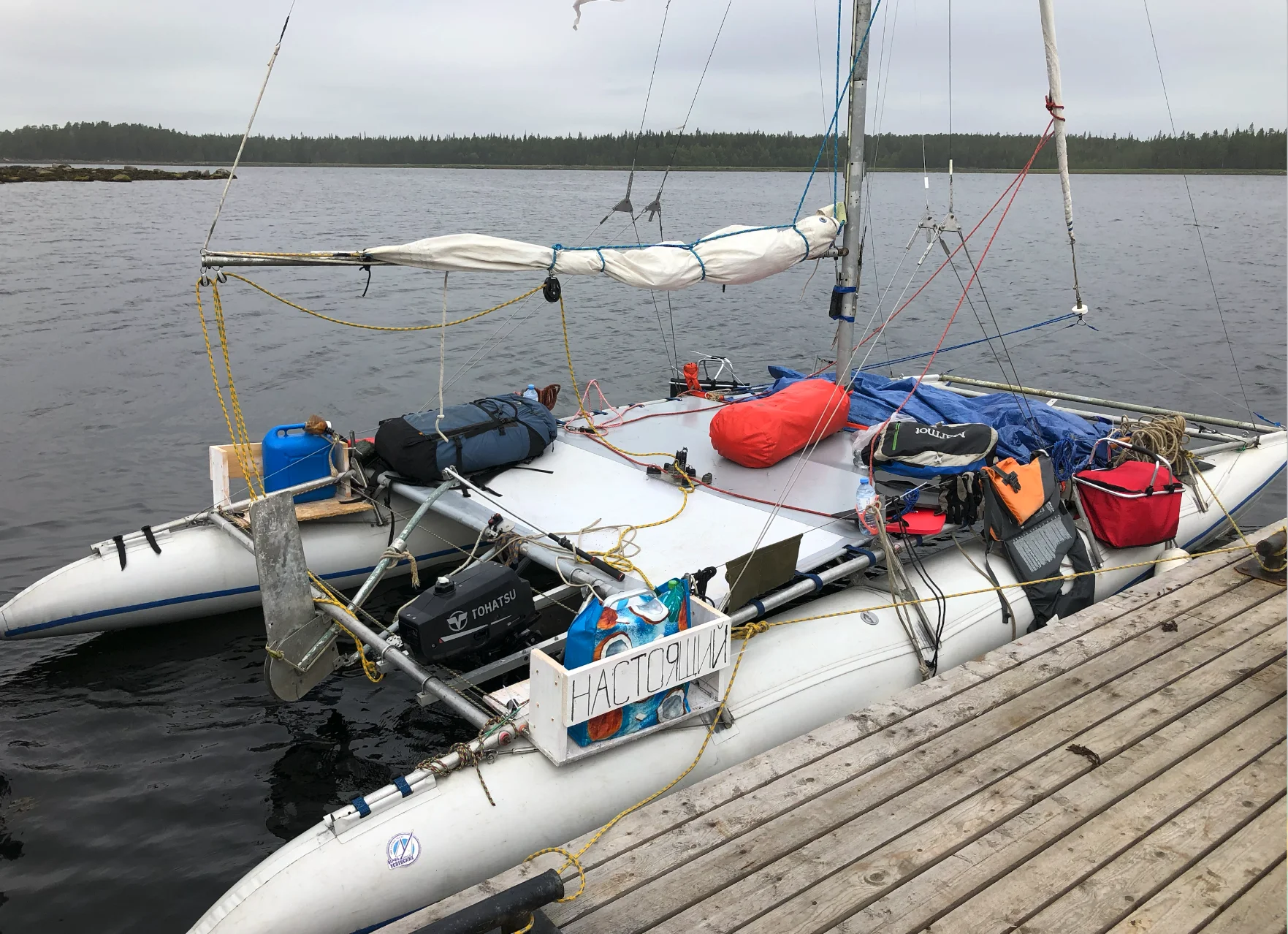
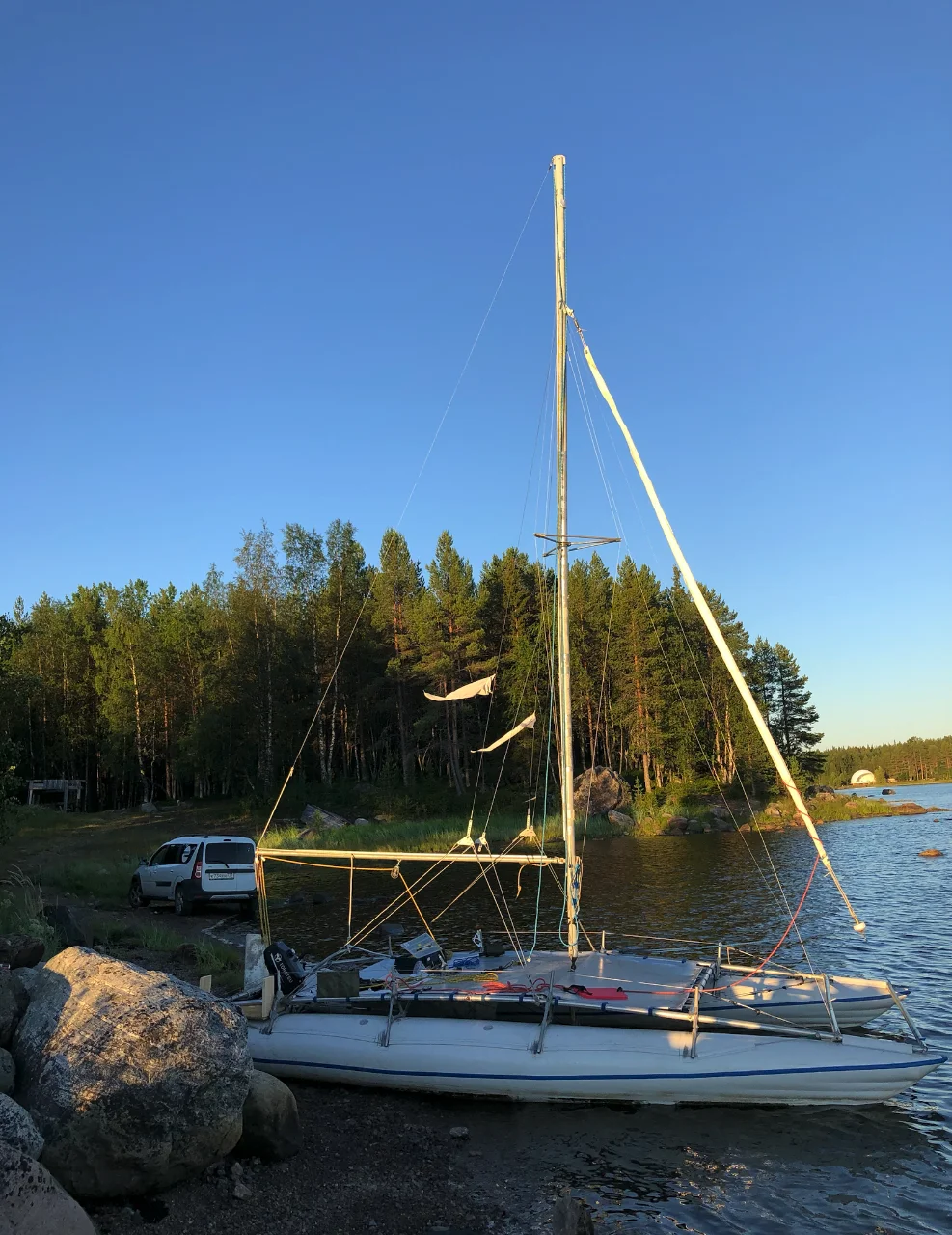
The entire boat was designed around components from the Tupolev Tu-154. The mast, for example, was made from the tube that originally supported passenger seats—you can still see the mounting holes. Thin aircraft spars became the structural frame, the stringers were reinforced with a cable truss, and instead of the usual four crossbeams, this boat has seven. It was an incredibly well-engineered racing catamaran, with every adjustment and tuning option a sailor could want.
Grigory was amazed. Sergey offered to sell the boat for $1,000—a fortune in Russia in 1994. Fortunately, Grigory had just entered the metal business and could afford it.
The boat was originally called Sachok, meaning an insect net. Grigory renamed it Tormoz ("Brake"), joking that he sailed it so badly he always lost races. Once he mastered the boat, he gave it a new name: Nastoyashchiy—"The Real One."
Later, Nastoyashchiy became the transport boat of the student diving club Farvater. Grigory also commissioned a larger catamaran called Navazhdenie ("Obsession").
In 2005, I joined the club on my first White Sea expedition. The catamaran was used only with an outboard motor—the sails were never even installed. By 2011, we had bought motorboats and decided to leave the catamarans behind. I asked if we could still take one just for fun, and Grigory said, "Fine—but you'll be the captain, and you'll be responsible for everything."
That was my first time ever stepping aboard a sailing boat—and I immediately became its captain.
I had an experienced first mate and learned quickly. I sailed my first few dozen miles and proved myself to be a responsible skipper. Then life took over, and for years I focused on work and family, although I always proudly told everyone that I was a real captain.
In 2015, Grigory bought a new catamaran called Krepkiy ("Sturdy"). The two older boats had deteriorated badly. One day he called me and said, "I can't bring myself to throw them away. I'm giving them to you because I know you won't throw them away either. Maybe one day you'll restore them."
That was the day I became not only a captain but also a boat owner.
In 2017, my friend Max Fyodorov suggested we actually do it. We found that Navazhdenie had almost completely rotted away, while the older Nastoyashchiy, built from aircraft tubing, had survived surprisingly well. Friends who built movie and theater sets let us use their huge workshop free of charge. All winter we replaced rotten tubes, installed new ropes, ordered new inflatable hulls, and built a completely new deck.
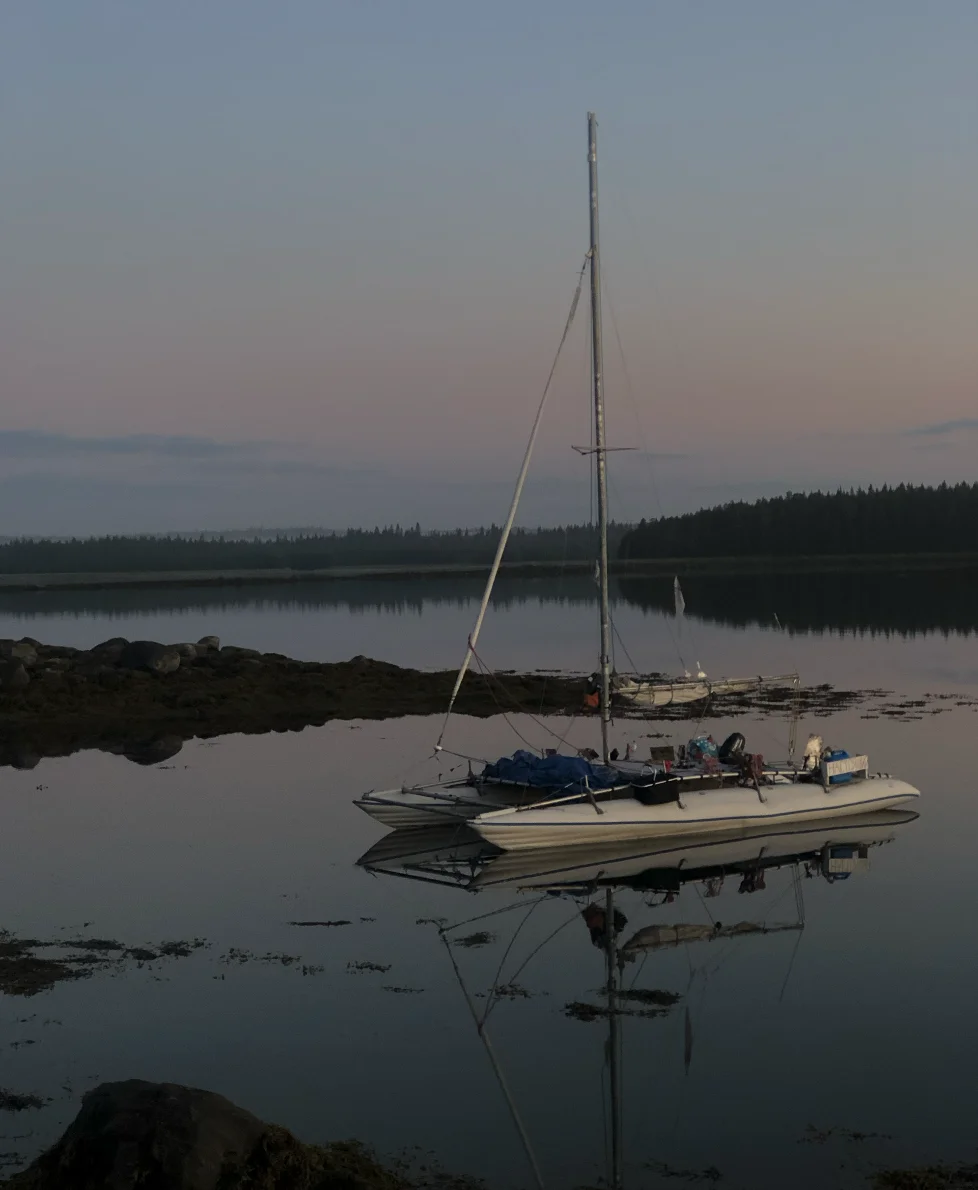
In the summer of 2018, Nastoyashchiy returned to the water. She competed in championships, visited the White Sea twice, received a new engine and new sails. But by 2021, more structural beams had begun to crack, and during an autumn squall the mast broke. We planned another major rebuild, but then Max and I stumbled upon an enormous high-performance catamaran at an unbelievable price. We bought it immediately, and Nastoyashchiy was put aside.
In 2022, I moved to Dubai. The warm, salty waters of the Persian Gulf would quickly destroy her aluminum frame, so the boat itself stayed behind. But I brought her inflatable hulls with me.
One day I plan to build a new carbon-fiber frame and bring this remarkable catamaran back to life once again.
And when that day comes, she will receive one final name:
Anikin.
In honor of the man who introduced me to this extraordinary world.